


A Night to Remember in Kyoto: Our Magical Gion Walk with a Bengali Surprise
May 11, 2026 | by bonginoz.com

There are some travel experiences that stay with you long after the journey ends. Not because they were grand or luxurious, but because they touched your heart in the most unexpected way. Our night walk through Kyoto’s famous Gion District on 21st April 2026 was exactly one of those experiences.
It was around 8 PM when my wife and I suddenly decided, “Let’s grab a coffee and head to Gion.”
That simple decision ended up becoming one of the most unforgettable nights of our Japan trip.
Originally, we were supposed to join the 5:30 PM walking tour on 19th April, the day we arrived in Kyoto. But after reaching Kyoto that afternoon, both of us were feeling quite unwell and exhausted. Reluctantly, we contacted the tour company asking if cancellation was possible. Thankfully, they were extremely kind and offered us the option to reschedule instead.
Without realizing it then, moving the tour to the night of 21st April — our final night in Kyoto — turned out to be the best decision we could have made.
And by the end of this story, you’ll know exactly why.
Coffee, Cold Winds & A Quiet Beginning
After finishing our coffee, we took a taxi from right in front of the Yodobashi store near Kyoto Station, very close to our hotel — Daiwa Roynet Hotel Kyoto Ekimae Premier.
We showed the pickup location to the driver, and soon we were gliding through Kyoto’s peaceful night streets towards Gion.
The air that evening was cold and crisp.
When we arrived, we walked towards the umbrella and concrete seating area mentioned in the pickup instructions. Since we had reached a little early, the place was almost empty. A few people passed by every now and then, and each time we wondered, “Maybe they’re part of our group?”
But nobody stopped.
For a moment, I even started wondering whether the tour might get cancelled altogether. I messaged the company, and they reassured us that the guide was on her way.
A few minutes later, a smiling lady approached us warmly and asked:
“Are you here for the night tour?”
We said yes.
She asked us where we were from, and we replied:
“We live in Melbourne, but originally we are from West Bengal, India.”
And then came the moment that completely surprised us.
She smiled brightly and said in Bengali:
“Ohh, Bangali!”
My wife and I were absolutely shocked.
Finding Bengal in the Heart of Kyoto
Before our tour had even started, Kyoto had already gifted us something magical.
Our guide introduced herself as Jun. She started speaking to us fluently in Bengali and told us that her husband is from Kolkata and that she herself had lived in Dhakuria, Kolkata, for almost 30 years.
Can you imagine that feeling?
Standing in the historic streets of Kyoto, thousands of kilometers away from home, and suddenly hearing Bengali spoken so naturally felt surreal.
Instantly, the cold evening felt warmer.
The conversation flowed effortlessly, and honestly, we were already enjoying ourselves before the actual walk had even begun.
Slowly, the other members of our group started arriving from different parts of the world. Soon we had a wonderful international group ready to explore Kyoto’s most mysterious and beautiful district under the night sky.
Walking Through the Dreamlike Lanes of Gion
As the tour began, we stepped into the enchanting alleys and lantern-lit lanes of Gion.
And what followed honestly felt less like a guided walk and more like entering another world.
Kyoto at night has a different soul altogether.

The narrow streets, traditional wooden machiya houses, softly glowing lanterns, quiet pathways, and the distant sound of footsteps created an atmosphere that felt timeless.

Jun — whom we now lovingly call Jun Didi — explained everything with incredible detail and passion.
She spoke about the history of Gion, Kyoto’s cultural heritage, and Japan’s traditions in a way that made every street feel alive with stories.
One of the most fascinating parts of the tour was learning about Shintoism and the differences between a Shrine and a Temple — something many visitors often confuse.


She pointed out beautiful architectural details hidden in plain sight:
- Traditional rain chains replacing drainpipes
- Wooden facades designed centuries ago
- Bottles of water placed outside homes and shops to discourage stray cats from entering
- Tiny details in the houses that carried generations of cultural meaning

Every corner felt poetic.

Every lane felt cinematic.
It truly was a magical journey — one that is honestly difficult to describe fully in words.

The Moment We Saw a Geiko and a Maiko
As we continued deeper into Gion, curiosity got the better of me and I finally asked Jun Didi:
“Will we actually see a Geisha tonight?”
Now, for those planning a Japan trip, let me tell you something important.
Seeing a real Geisha in Kyoto is extremely rare.
And if you are fortunate enough to see one, respecting their privacy is absolutely essential. Photography without permission is strictly prohibited and punishable in many areas.
Before visiting Japan, I had already read a little about Geisha culture, but during the tour I learned something new — the term “Geisha” is not commonly used in Kyoto.
In Kyoto:
- Geiko are fully trained professional entertainers skilled in traditional arts like dance, music, and conversation.
- Maiko are apprentices training to become Geiko, usually recognized by their more colorful attire and elaborate hairstyles.
As Jun Didi explained these beautiful traditions while we approached the area near Miyako Odori Theatre, something unbelievable happened.

Right in front of us, walking gracefully towards the theatre, were a Geiko and a Maiko.
It felt unreal.
The elegance.
The silence.
The beauty of the moment.
For a few seconds, the entire street seemed frozen in time.
And the surprises did not end there — during the rest of our walk, we were lucky enough to spot around 4–5 Geiko and Maiko in total.
The Secret World of Ochaya Tea Houses
Another fascinating part of the evening was learning about Kyoto’s famous Ochaya tea houses.
These are exclusive traditional establishments where Geiko and Maiko entertain guests through music, dance, conversation, and cultural performances.
But entering an Ochaya is not simple.
In fact, for first-time visitors to Japan, it is nearly impossible.
Most Ochaya operate entirely through introductions and trusted relationships built over many years. Even wealthy visitors cannot simply walk in and request entry.
That mystery and exclusivity are part of what makes Gion so fascinating.
Behind every quiet wooden door lies a world that has preserved centuries of Japanese tradition.

A Goodbye We Will Never Forget
As the tour came to an end, none of us really wanted the night to finish.
The lanes of Gion had cast a spell on us.
The glowing temples.
The hidden pathways.
The silence of Kyoto’s old streets.
Everything lingered in our hearts long after the walk ended.
We spent some extra time talking with Jun Didi, and you will actually see her in our future YouTube vlog on our channel.
Despite the late hour, she even helped us find and arrange a taxi back — all while chatting with us warmly in Bengali.
Sometimes travel gives you beautiful places.
Sometimes it gives you beautiful people.
That night in Kyoto gave us both.
A Small Request to Future Travelers Visiting Gion
If you ever visit Gion, please remember this:
- Respect private alleys and restricted areas
- Do not chase or photograph Geiko or Maiko without permission
- Keep noise levels low
- Preserve the peaceful atmosphere that makes Kyoto so special
Gion is not a theme park.
It is a living cultural heritage.
And perhaps that is why it feels so magical.
Even today, the memories of those lantern-lit lanes still linger in our minds.
And somewhere in the heart of Kyoto, under the soft glow of the night lanterns, a little piece of Bengal unexpectedly found us.
RELATED POSTS
View all



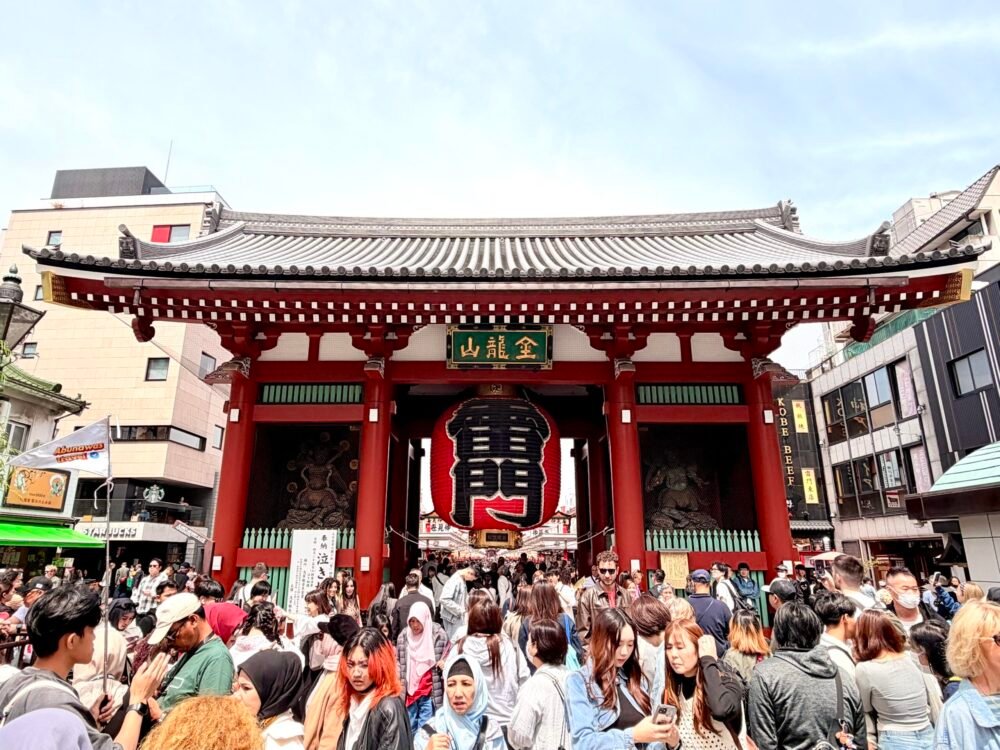
Oldest Temple in Tokyo – Senso-ji Temple, Meiji Shrine & Amazing Japanese Food | Japan Travel Guide 2026
June 1, 2026 | by bonginoz.com